Battery Storage Dominates National Grid's Inaugural EFR Tender
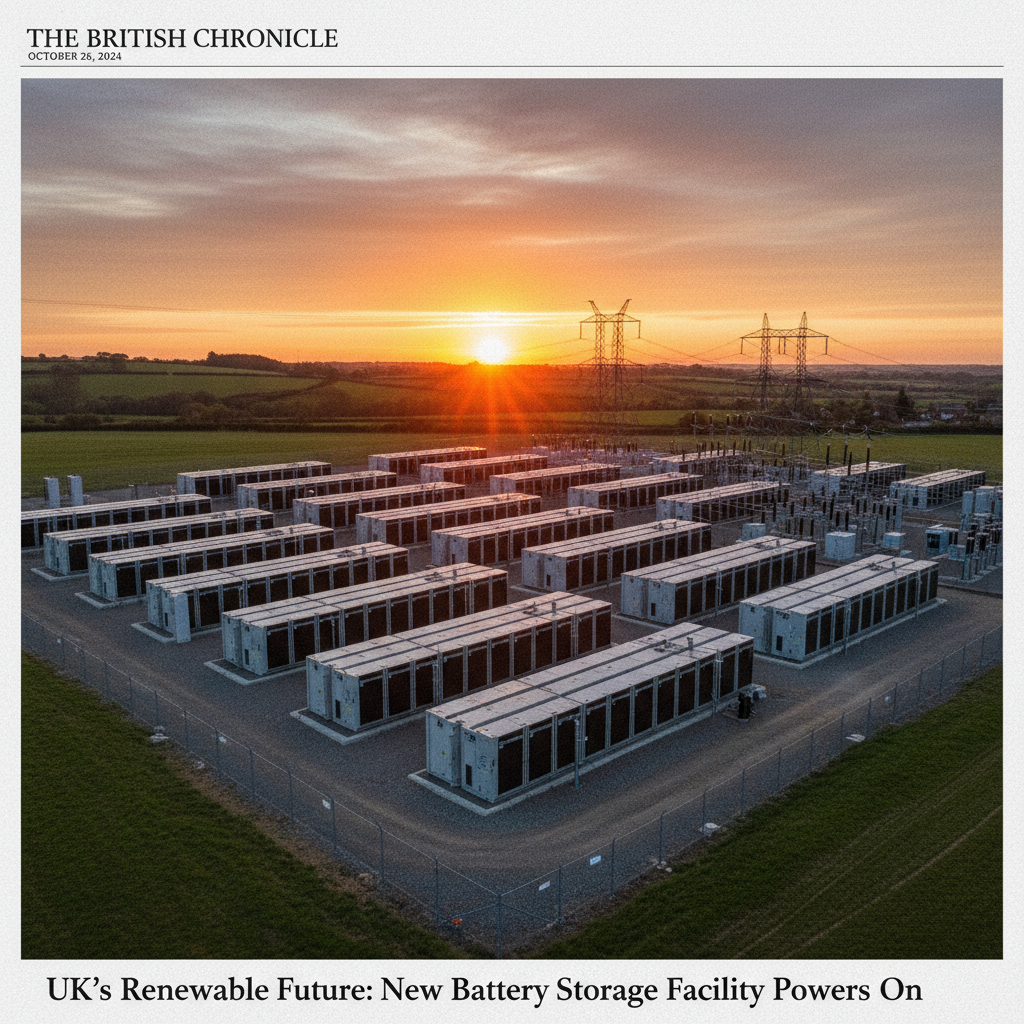
Battery assets have emerged as the primary technology in National Grid's 200MW Enhanced Frequency Response (EFR) tender, marking a significant step for grid-scale balancing services in the UK.
Battery Storage Triumphs in National Grid's Landmark EFR Tender
Battery energy storage systems have decisively led the successful projects in National Grid's 200MW Enhanced Frequency Response (EFR) tender, marking the technology's inaugural use for grid-scale balancing services in the United Kingdom. The tender outcomes signal a pivotal moment for the UK's energy infrastructure, embracing advanced solutions to maintain grid stability (Source: solarpowerportal.co.uk).
Out of 64 unique project sites that participated in the tender, 61 were based on battery storage technology. This overwhelming preference underscores the capability of batteries to provide the rapid response required for modern grid management. In contrast, only two projects involved demand reduction and one utilised thermal generation, highlighting the dominance of battery solutions (Source: solarpowerportal.co.uk).
National Grid received bids from 37 providers, ultimately awarding contracts to eight winners. These included prominent energy companies such as EDF Energy Renewables, Vattenfall, Low Carbon (with two projects), E.ON UK, Element Power, RES, and Belectric. The awarded contracts span a four-year term, designed to offer developers the necessary certainty to further develop and deploy this critical technology (Source: solarpowerportal.co.uk).

Enhancing Grid Stability and Efficiency
The EFR tender was specifically designed to integrate novel technologies capable of delivering sub-second response solutions to system volatility. This represents a substantial improvement over previous frequency response mechanisms, which typically took up to ten seconds to react. The enhanced ability to almost instantaneously control frequency variations is anticipated to result in considerable cost savings, estimated at approximately £200 million. This efficiency gain is expected to translate into reduced costs for end consumers (Source: solarpowerportal.co.uk).
Cordi O’Hara, Director of UK System Operator at National Grid, emphasised the forward-looking nature of the initiative. O'Hara stated that National Grid is continuously exploring ways to optimise energy utilisation, describing the project as central to their 'Power Responsive' efforts to balance the grid efficiently. She expressed confidence that storage technology has a significant role to play in the future flexible energy system, calling it "the beginning of an exciting new chapter for the industry" (Source: solarpowerportal.co.uk).
Addressing System Inertia Challenges
The rapid response capability of battery storage is particularly crucial for counteracting the loss of system inertia. System inertia, which describes how well the grid resists changes in frequency, is increasingly affected by the growing integration of renewable energy sources. As more intermittent renewables come online, maintaining grid stability requires agile and responsive solutions like those provided by battery storage. This EFR tender therefore represents a proactive step in adapting the UK's grid to a future dominated by renewable generation (Source: solarpowerportal.co.uk).
What this means for asset owners and insurers
- Increased Demand for BESS Infrastructure: The dominance of battery storage in this tender signals a robust and growing market for BESS assets, driving investment and development in the UK.
- Focus on Performance and Reliability: Insurers will need to assess the performance guarantees and operational reliability of these cutting-edge EFR battery assets, considering their critical role in grid stability.
- Risk of Thermal Runaway and Business Interruption: As BESS facilities become more prevalent, the potential for thermal runaway and subsequent business interruption (BI) losses becomes a key consideration for both asset owners and insurers, requiring robust risk management and specialised coverage.
- Evolution of Grid Interconnection Risks: The integration of fast-responding assets necessitates a deeper understanding of grid interconnection risks and potential liabilities, including professional indemnity for system designers and operators.
Source: solarpowerportal.co.uk