Green Volt Floating Offshore Wind Project Secures Planning Approval in Scotland
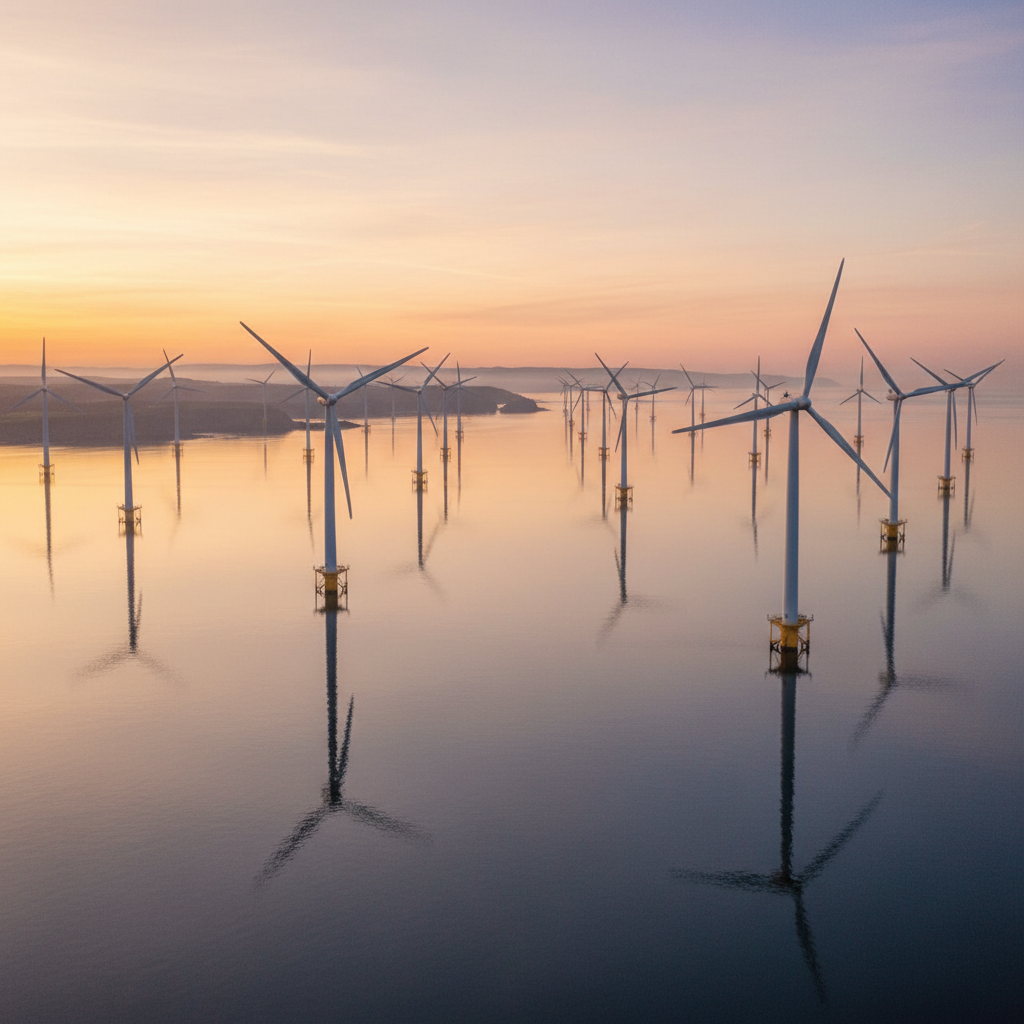
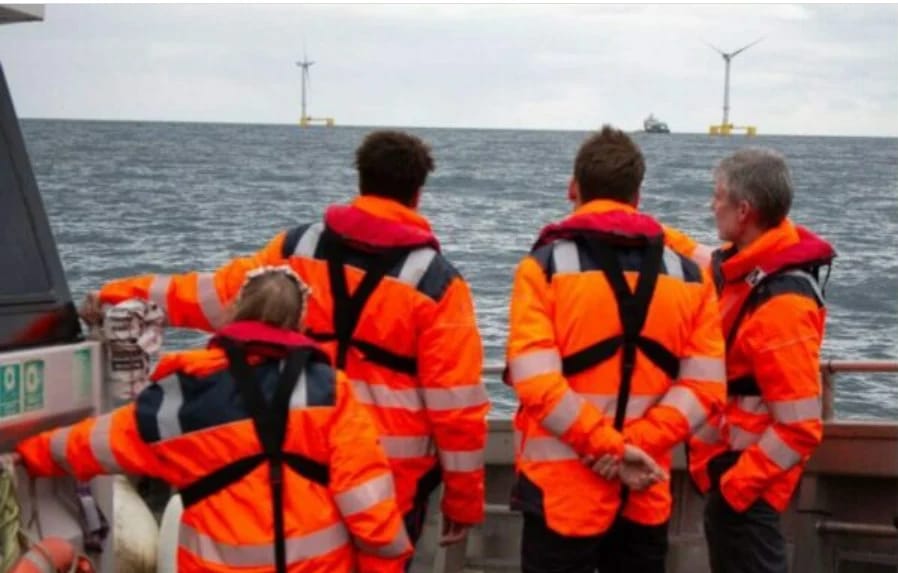
A significant 560MW floating offshore wind project, Green Volt, has been granted offshore planning approval, marking a key milestone for Scotland's renewable energy ambitions.
Offshore wind developers Flotation Energy and Vårgrønn have announced that their Green Volt floating offshore wind project has received crucial offshore planning approval. This development positions Green Volt as Europe's first commercial-scale floating wind project and an important step in the UK's renewable energy transition, as reported by solarpowerportal.co.uk.
A New Era for Offshore Wind
The Green Volt project, with a planned capacity of up to 560MW from 35 floating wind turbines, aims to supply renewable electricity to oil and gas platforms, thereby replacing conventional natural gas and diesel power generation. Crucially, it will also feed power into the UK grid, contributing significantly to national energy targets. The project's approval comes as part of Crown Estate Scotland's Innovation and Targeted Oil & Gas (INTOG) leasing round, designed to foster innovative offshore energy solutions.
Humza Yousaf, then First Minister of Scotland, highlighted the importance of this consent, stating it would “help secure Scotland’s place at the forefront of floating wind technology.” He also noted the issuance of relevant consents and marine licences for two floating offshore wind projects, one wave project, and three tidal energy projects ahead of the Allocation Round 6 (AR6) application window closure, underscoring Scotland's commitment to robust consent processes for timely and appropriately sited developments.
Green Volt is a joint venture, with ownership split equally between Flotation Energy and Vårgrønn, the latter being a collaboration between Plenitude (Eni) and HitecVision. Olav Hetland, CEO at Vårgrønn, emphasised the project's role as an “essential stepping stone from current small-scale projects to gigawatt-size developments,” crucial for scaling up new technologies and supporting the supply chain.
Economic Impact and Future Potential
Floating offshore wind holds significant promise for the UK, given its extensive coastline and favourable wind conditions. The Green Volt project's scale is seen as a vital step towards realising this potential. Beyond Scotland, the economic benefits of floating offshore wind are also being explored in other regions of the UK.
Recent research from the Crown Estate, published in February 2024, indicated that floating offshore wind opportunities in the Celtic Sea alone could generate up to £1.4 billion for the UK economy. This study, known as The Celtic Sea Blueprint by Lumen Energy and Environment, projected that the development of new floating wind farms off the coasts of South Wales and South West England could create up to 5,300 new jobs, fostering a skilled workforce for the growing renewable sector. The first three floating offshore wind farms planned for the Celtic Sea are expected to be among the world's largest, potentially generating up to 4.5GW of electricity.
Scotland, in particular, has been identified for its high wind energy generation capacity, with projects like a 14-turbine wind farm in the Scottish Borders set to become Britain's largest people-owned renewable energy project, capable of powering over 50,000 homes and generating around 145GWh per year. The approval of Green Volt further solidifies Scotland's pioneering role in harnessing its natural resources for renewable energy production, contributing to both national energy security and climate goals.
What this means for asset owners and insurers
- Complex Risks: Floating offshore wind projects introduce novel engineering and operational challenges, such as dynamic cabling, mooring systems, and deployment in deeper waters, requiring specialist risk assessment and tailored insurance products.
- Supply Chain Development: The 'stepping stone' nature of Green Volt aids in maturing the supply chain for larger gigawatt-scale projects. Insurers need to monitor this evolution to understand new exposures and build capacity for future mega-projects.
- Business Interruption (BI) & Delay in Start-Up (DSU): Given the innovative technology and challenging offshore environment, potential delays during construction and commissioning, as well as operational downtime, carry significant financial implications requiring robust BI and DSU coverage.
- Environmental Liability (EL) & Property Damage: The remote offshore location and interaction with existing oil and gas infrastructure necessitate comprehensive EL coverage, alongside standard property damage and marine perils cover, to address potential pollution or damage incidents.
Source: solarpowerportal.co.ukhttps://www.solarpowerportal.co.uk/utility-scale-solar/560mw-floating-offshore-wind-project-receives-planning-approval