Solar Industry Anticipates Lower Strike Prices in Upcoming UK CfD Auction
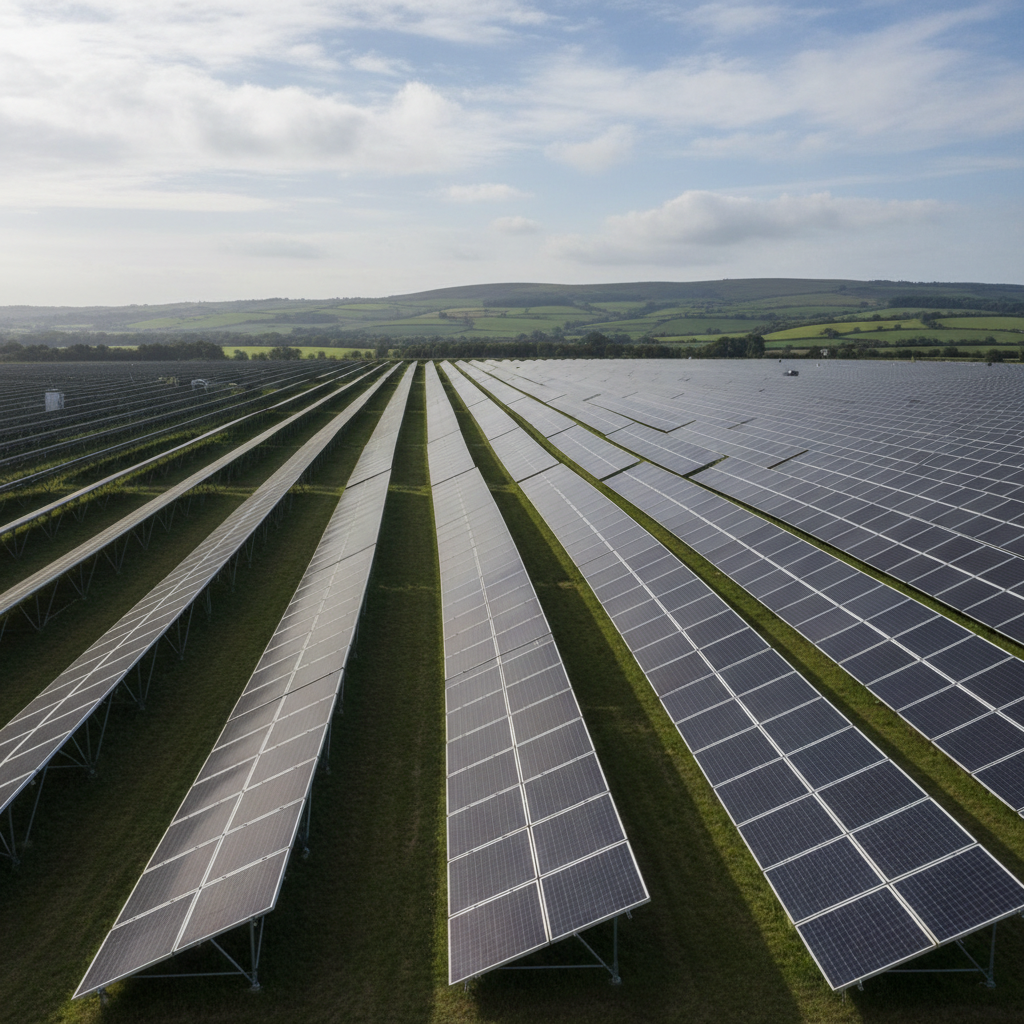

Solar Energy UK predicts a 9-16% reduction in strike prices for solar power in the eagerly awaited Contracts for Difference (CfD) Allocation Round 7a.
The UK solar industry is poised for a significant development, with the trade body Solar Energy UK (SEUK) anticipating a notable reduction in strike prices for solar power within the forthcoming Contracts for Difference (CfD) Allocation Round 7a. The results of this round are keenly awaited, with expectations for solar strike prices to fall to between £63 and £68 per megawatt-hour (MWh).
This predicted range represents a 9-16% discount on last year's administrative strike price of £72.92/MWh, which acted as the cap for bids. Several factors underpin this optimistic forecast, including a robust pipeline of solar projects and the £310 million budget allocated for all non-offshore wind technologies in this round. A critical change introduced for AR7 is the extension of contract durations from 15 years to 20 years, which enhances revenue certainty for developers and is likely to contribute to more competitive bidding.
Auction Dynamics and Industry Impact
Historically, solar strike prices have fluctuated, with £64.09/MWh in AR4 and £65.49/MWh in AR5 (benchmarked to 2024 prices). AR6 saw contracts awarded to 3.3GW of solar PV at £72.92/MWh. For the current AR7a, SEUK estimates that approximately 6GW of solar capacity is eligible to bid for a CfD. However, considering some developers may opt for alternative financing mechanisms like Power Purchase Agreements (PPAs), it is projected that AR7a will ultimately deliver between 3.5GW and 4.5GW of new solar plants coming online between 2028 and 2031. This aligns broadly with the targets set in the Clean Power 2030 Action Plan.
Recent data from Solar Media Market Research indicates substantial growth in the UK's solar capacity, with 3.5GWp of ground-mounted solar PV added in 2025, bringing the total operational capacity past 23GWp. The increasing scale of individual solar PV projects, with more schemes exceeding 50MW entering the planning system as Nationally Significant Infrastructure Projects (NSIPs), suggests that while fewer individual projects might win CfDs, the overall capacity awarded could still be substantial. Historically, the average capacity of awarded sites has been around 35MW, implying 100-130 projects could secure CfDs if this trend continues.
The Role of CfDs in Energy Stability
The Contracts for Difference scheme is a cornerstone of the UK's renewable energy policy, designed to stabilise energy prices for consumers. Under the CfD mechanism, when wholesale electricity prices fall below the agreed strike price, renewable energy generators receive 'top-up' payments, funded through consumer bills. Conversely, if wholesale prices exceed the strike price, generators pay back the difference, which serves to reduce the 'policy costs' applied to consumer bills. This two-way mechanism provides generators with predictable revenues, encouraging investment in renewable infrastructure, while shielding consumers from the full volatility of wholesale energy markets.
What this means for asset owners and insurers
- Revenue Certainty: The extension of CfD contracts to 20 years offers enhanced long-term revenue predictability for solar asset owners, potentially influencing project financing and bankability. This stability can also impact business interruption (BI) insurance considerations, as projected revenues become more robust.
- Competitive Bidding & Project Margins: Lower strike prices indicate intense competition within the solar sector. Asset owners must ensure their projects are highly efficient and cost-effective to secure contracts, which can impact equipment choices, construction methods, and operational expenditure, all relevant to project risk and insurance costs.
- Project Scale and Risk: The trend towards larger solar projects (NSIPs) means increased exposure for insurers. Larger single-site capacities can lead to higher maximum probable loss (MPL) scenarios, requiring careful assessment of property damage, construction all risks (CAR), and professional indemnity (PI) coverage.
- Operational Efficiency and Maintenance: To achieve profitability at lower strike prices, operational efficiency and stringent maintenance will be paramount. Insurers may see increased demand for performance-based policies or require evidence of robust operations and maintenance (O&M) strategies to mitigate risks associated with equipment failure or underperformance.
Source: solarpowerportal.co.uk