TRIG to Develop 250MW Battery Storage Across Northern England Sites
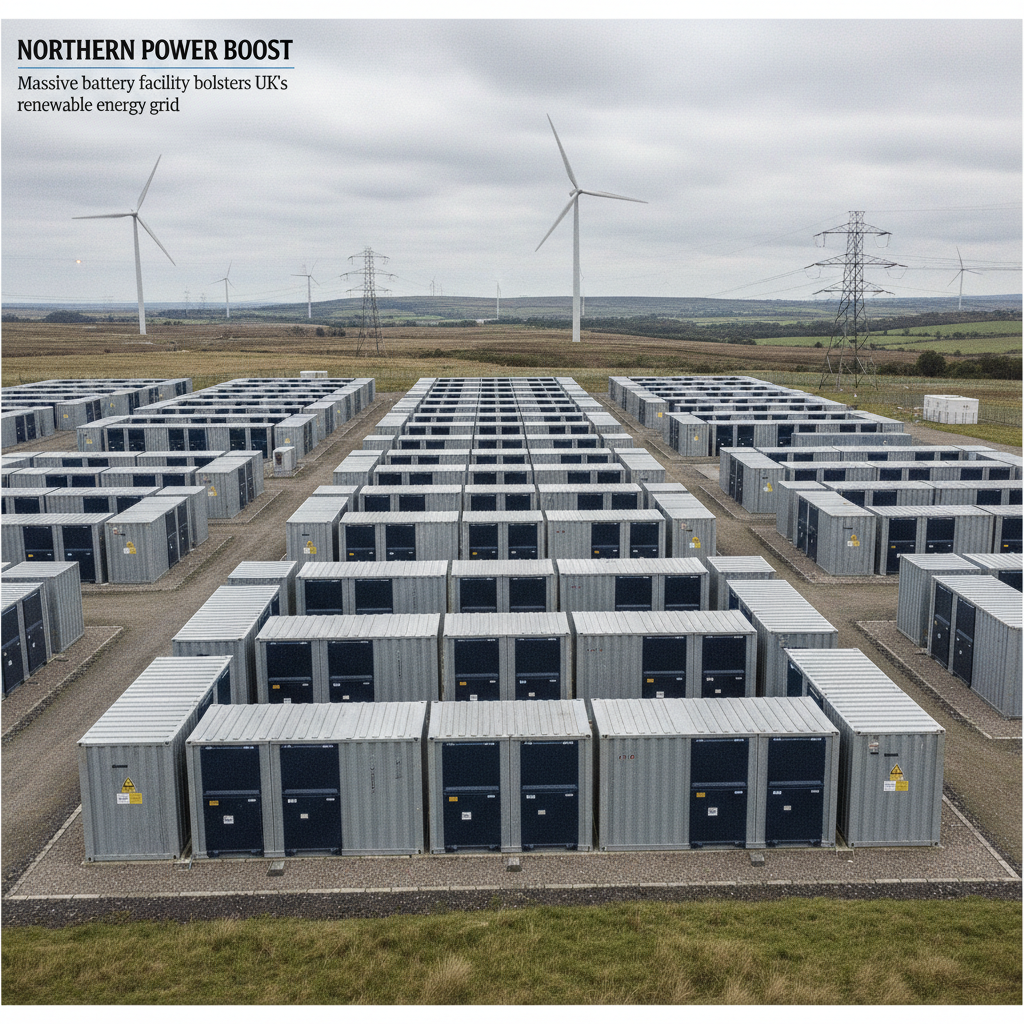
The Renewables Infrastructure Group (TRIG) is acquiring development rights for three new battery energy storage system (BESS) projects totalling 250MW in the North of England.
TRIG Boosts UK Grid with 250MW Battery Storage Projects in Northern England
The Renewables Infrastructure Group (TRIG) has announced its intention to acquire development rights for a significant 250MW of battery energy storage system (BESS) capacity across three distinct projects in Northern England. This move is poised to enhance grid stability and support the integration of intermittent renewable energy sources within the UK.
The initiative involves three BESS projects, with two sites, totalling 165MW with a two-hour duration (130MWh capacity), slated for grid connection and operational commencement in 2024 and 2025. A third, larger project of 85MW, also with a two-hour duration, is scheduled for development in 2029, though its construction could be expedited if market demand dictates.
Strengthening UK Energy Security and Decarbonisation
These battery storage facilities are considered crucial for the UK's transition to a green, renewable energy grid. By storing surplus renewable energy and releasing it during periods of high demand or low generation, BESS projects help to balance the grid, providing essential flexible capacity. This flexibility is vital for supporting energy-intensive industries and ensuring a reliable power supply.
Richard Crawford of InfraRed Capital Partners, who advises TRIG, highlighted the broader implications of such investments. He stated, “Greater deployment of flexible capacity and renewable generation are crucial components in addressing energy security, decarbonisation and energy affordability.” Crawford added that incorporating battery storage into TRIG's diverse generation portfolio is expected to further reduce revenue variability, leveraging the expertise of InfraRed and RES in developing such projects. TRIG views these flexible capacity projects as a means to diversify its portfolio, helping to provide stable revenue, particularly against a backdrop of fluctuating wholesale gas prices, and complementing its existing renewable asset base.
Development and Market Context
The development rights for these sites were acquired from Aura Power Developments Limited. Each site comes with secured land rights, planning permission, and existing grid connection agreements. Renewable Energy Systems (RES) has been contracted to oversee the progression of these projects, including equipment procurement and construction.
The UK battery energy storage market is experiencing rapid growth, with BESS technology playing a pivotal role in the decarbonisation of the energy sector. Recent activities in the sector include Bluestone Energy's submission of proposals for three 69MW BESS projects at Scottish Water sites in Renfrewshire, and Simec Atlantis Energy's confirmation of secured grid variations for a substantial 230MW/460MWh BESS project in Uskmouth. These developments underscore the increasing recognition of battery storage as a fundamental component of the UK's future energy landscape.
What this means for asset owners and insurers
- Increased Asset Volume: More large-scale BESS projects translate to a growing demand for specialised insurance coverage for construction (CAR/EAR), operational risks, and business interruption.
- Technology and Performance Risks: While BESS is maturing, operational risks such as thermal runaway, degradation, and performance guarantees remain key considerations for asset owners and require careful underwriting from insurers.
- Interconnectivity and Grid Impact: The role of these BESS units in grid stability and energy arbitrage introduces complex revenue models and potential for larger business interruption (BI) or delay in start-up (DSU) claims if commissioning or operational issues arise.
- Supply Chain and Construction Risks: With RES contracted for development, ensuring robust supply chain management for equipment and adherence to construction timelines will be critical, impacting DSU insurance considerations and project finance.
Source: solarpowerportal.co.uk