UK EV Infrastructure Urgently Needs Faster Development to Meet Demand
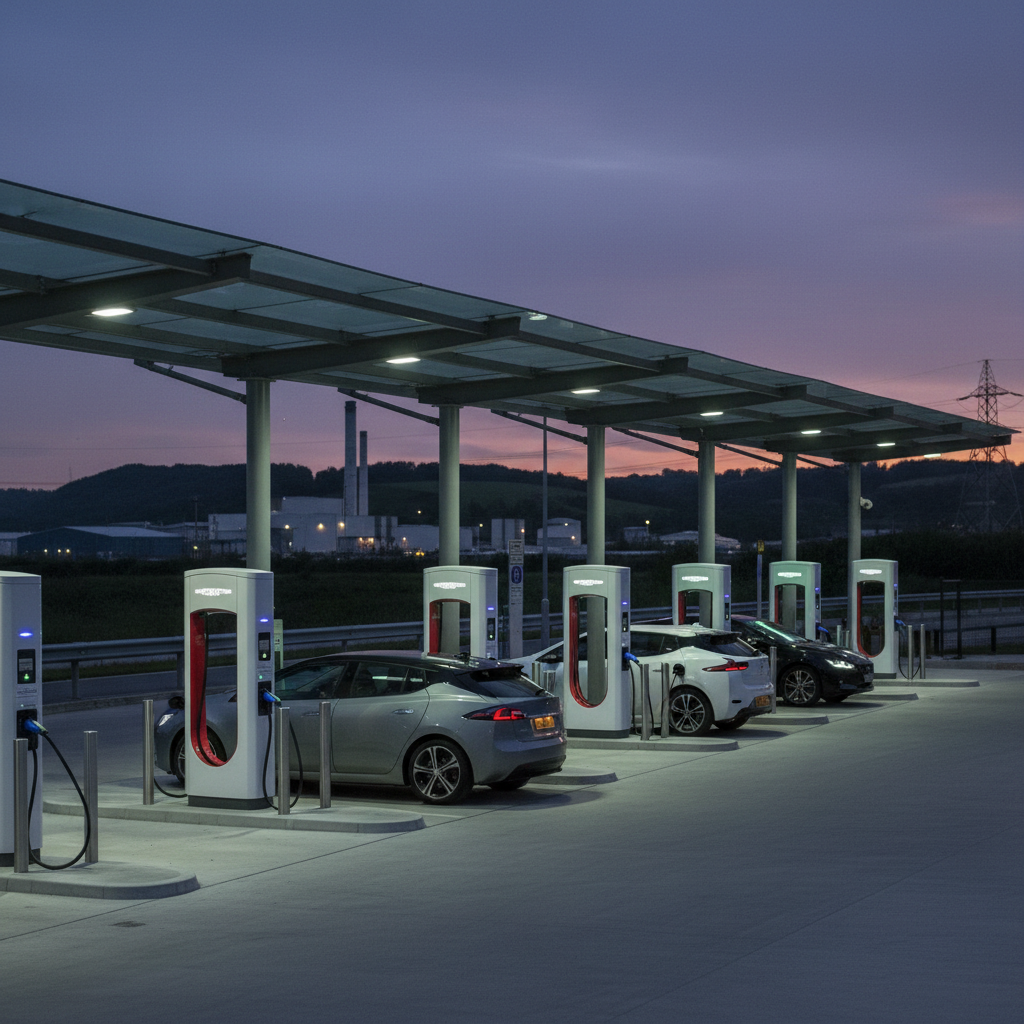

Despite surging electric vehicle adoption, a key industry leader warns that UK charging infrastructure must accelerate to keep pace with demand and avoid creating a two-tier network.
Britain is experiencing a significant surge in electric vehicle (EV) adoption, with battery electric vehicles (BEVs) surpassing petrol cars as the UK's best-selling fuel type for the first time in August 2026. However, industry figures caution that the pace of EV charging infrastructure development is struggling to keep up with this accelerated demand, risking a bottleneck in the transition to electric transport.
According to Nick Tatum, Chief EV & Energy Officer of Moto Hospitality, the question is no longer whether the UK will electrify transport, but whether its infrastructure can scale rapidly enough to meet accelerating demand and ensure equitable access for all drivers. While government targets aim for 300,000 public charge points by 2030, a Public Accounts Committee report noted significant regional disparities, with 43% of charge points concentrated in London and the South-East, leaving crucial motorway networks and rural areas underserved.
Infrastructure Must Lead, Not Follow
With over 1.58 million electric vehicles now on UK roads, consumer confidence in EVs is strong. However, the year-to-date BEV share of 25.6% still falls short of the 33% Zero Emission Vehicle (ZEV) mandate target. While some industry voices suggest recalibrating the mandate, Moto Hospitality argues that the real challenge lies in infrastructure delivery. Mr. Tatum emphasises that the same grid delays impacting reindustrialisation are also hindering the expansion of vital charging capacity on motorways and other key routes.
Private investment is crucial, with Moto Hospitality committing £500 million to enhance its facilities, including quadrupling EV charging capacity and establishing 15 eHGV superhubs. These superhubs are designed to provide up to 100 charging bays each, supporting the transition for electric heavy goods vehicles (eHGVs). This level of investment, however, relies on policy certainty from the government.
Policy Certainty and Regional Equity Needed
To address the infrastructure gap, Moto Hospitality calls for specific government actions. Firstly, maintaining the ZEV mandate target is essential, with the focus shifted to accelerating infrastructure delivery rather than lowering ambition. Secondly, fixing grid connection delays, identified by the Prime Minister as a barrier to reindustrialisation, must explicitly include EV charging rollout. Thirdly, targeted efforts are needed to close the charging gaps on motorways and in regions beyond London and the South-East to prevent a two-tier network. Finally, continued support for fleet transition, particularly eHGV infrastructure, is vital for decarbonising freight.
Moto Hospitality’s recent 75-year lease extensions with the Department for Transport and National Highways provide a long-term framework for their investment. The company currently operates over 1,000 ultra-rapid charging bays across its UK motorway network, directly tackling the identified motorway charging deficiencies. The message to government is clear: the upward trend in EV adoption is undeniable, and the urgency shown for grid delays and regional growth must extend equally to EV charging infrastructure.
Source: transportandenergy.com
What this means for asset owners and insurers
- Business Interruption (BI) & Delay in Start-Up (DSU): Grid connection delays, highlighted as a major impediment, can significantly impact the operational timelines and revenue generation for new EV charging sites, requiring robust BI and DSU coverage.
- Property Damage & Public Liability: The rapid expansion of charging infrastructure, including large-scale eHGV hubs, increases exposure to risks such as thermal runaway in batteries, electrical fires, and public safety incidents, necessitating comprehensive property and public liability insurance.
- Supply Chain & Contingent BI: The reliance on a stable and rapidly expanding grid infrastructure for EV charging creates supply chain risks. Insurers and asset owners need to consider how disruptions to grid upgrades or equipment supply could impact charging network availability and associated revenues.
- Strategic Planning & Underwriting: Insurers will increasingly need to understand regional charging density, grid capacity, and future expansion plans to accurately underwrite risks for charging network operators and EV fleet owners, particularly concerning regional disparities mentioned in the article.