UK Grid Stocks Poised for AI Data Centre Power Demand, with Renewable Focus
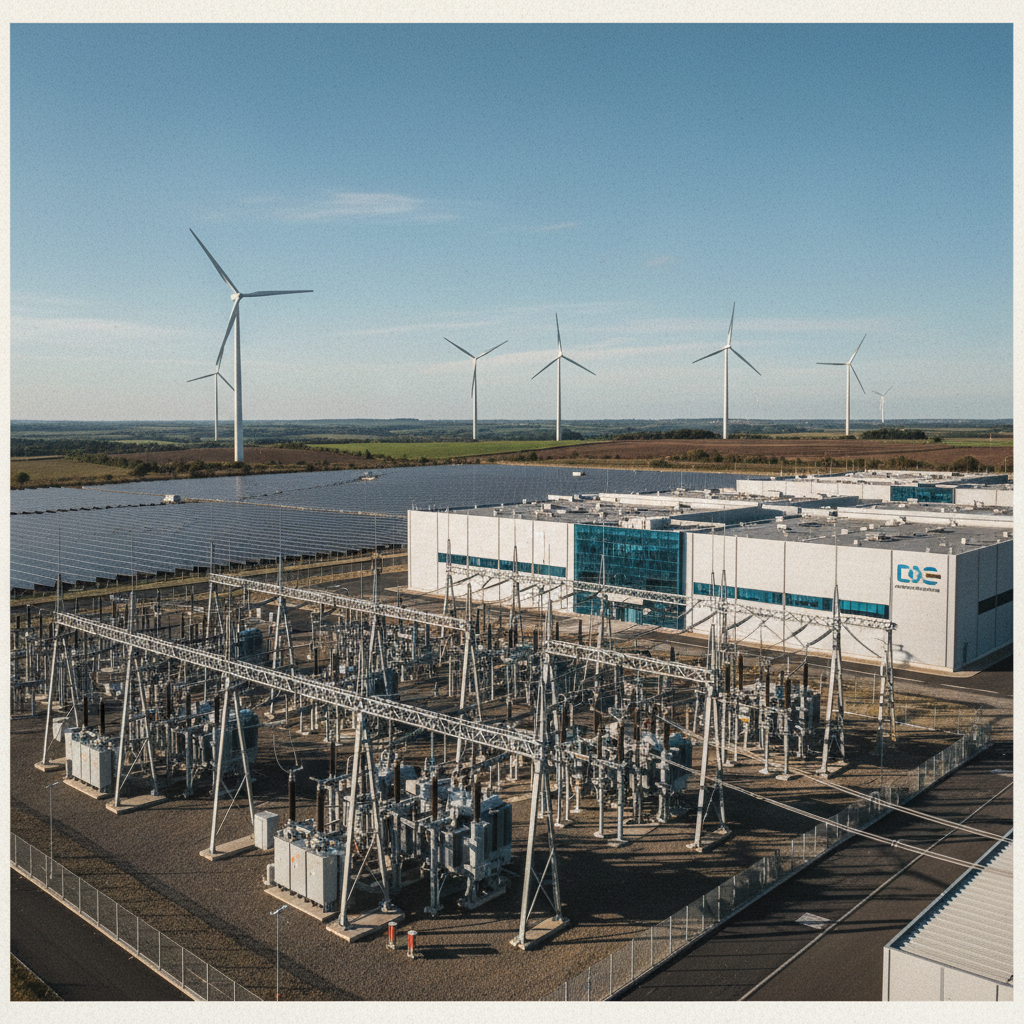

Increased demand from AI data centres is highlighting the critical role of UK power grid infrastructure and specific companies, including a major renewable generator, in enabling this growth.
The rapid expansion of Artificial Intelligence (AI) data centres in the UK is placing unprecedented demands on the national power grid, bringing renewed focus to the companies that supply and manage this critical infrastructure. A recent analysis by Simply Wall St., published on Yahoo Finance, highlights how these power requirements are drawing investor attention to specific UK grid-related stocks, particularly those capable of providing flexible, low-carbon power solutions.
The article notes that while neocloud operators compete for funding, it is the electricity networks and equipment providers that ultimately control the 'on switch' for AI. This dynamic underscores the essential role of robust and adaptable grid infrastructure in supporting the burgeoning AI industry.
Key Players in Grid and Power Infrastructure
The analysis points to several companies, with Drax Group (LSE:DRX) featuring prominently. Drax is identified as a major UK renewable generator, providing large-scale, dispatchable low-carbon electricity and crucial grid support services—capabilities increasingly vital for data centre operators. The company's operations, spanning biomass generation, energy solutions, and pellet production, primarily serve the UK market. The report suggests that Drax's substantial grid connections and flexible power assets are well-suited to manage the intermittent power demands of energy-intensive AI workloads.
Further, the analysis highlights Drax's ongoing investment in battery storage, with over 700MW under development and approximately £500m committed capital. This investment, coupled with its Flexitricity optimisation platform, is expected to significantly enhance Drax's ability to provide BESS system services. Such flexibility is crucial for maintaining grid stability and ensuring a consistent power supply to data centres, which often require continuous, high-quality electricity.
Another company mentioned, Volex (LSE:VLX), specialises in supplying power and high-speed connectivity products, including essential data centre power cables. Its role involves providing the heavy-duty cabling and assemblies that transform new AI data halls and substations into operational assets, underpinning the physical connectivity of the power network.
The Future of Grid Resilience and Renewable Integration
The increasing power demand from AI data centres acts as a significant catalyst for further investment and innovation within the UK's power grid. Companies like Drax, with their focus on renewable generation and grid flexibility, are positioned to benefit from this trend while simultaneously supporting the UK's broader decarbonisation goals. The integration of renewable energy sources and advanced energy storage solutions becomes even more critical as demand for high-capacity, reliable power intensifies. The article implicitly suggests that policy and capital expenditure decisions will heavily influence how companies like Drax evolve their grid roles in an AI-driven world.
What this means for asset owners and insurers
- Increased Grid Strain & Reliability Concerns: The surge in power demand from AI data centres could lead to heightened grid strain, increasing the risk of power interruptions. Asset owners need robust backup power solutions and insurers may see an increase in Business Interruption (BI) or Contingent Business Interruption (CBI) claims related to grid instability.
- Demand for Flexible Generation & Storage: As data centres require consistent, high-quality power, the demand for flexible generation (like biomass) and battery energy storage systems (BESS) will grow. This presents opportunities but also risks related to the performance, safety, and longevity of these assets, requiring comprehensive insurance coverage for thermal runaway, operational breakdown, and DSU.
- Infrastructure Investment & Associated Risks: Significant investment in grid upgrades, new substations, and cabling infrastructure is anticipated. This involves considerable construction risks (CAR/EAR), professional indemnity (PI) for design, and public liability (PL) during installation, relevant for both grid operators and developers.
- Policy & Regulatory Impact: Changes in energy policy and regulation to support AI data centre power requirements, potentially favouring low-carbon or renewable sources, will influence project viability and risk profiles. Insurers will need to understand the evolving regulatory landscape to accurately underwrite new or expanded renewable grid assets.
Source: finance.yahoo.com