UK Rooftop Solar Installations Surge Towards Record 300,000 in 2026
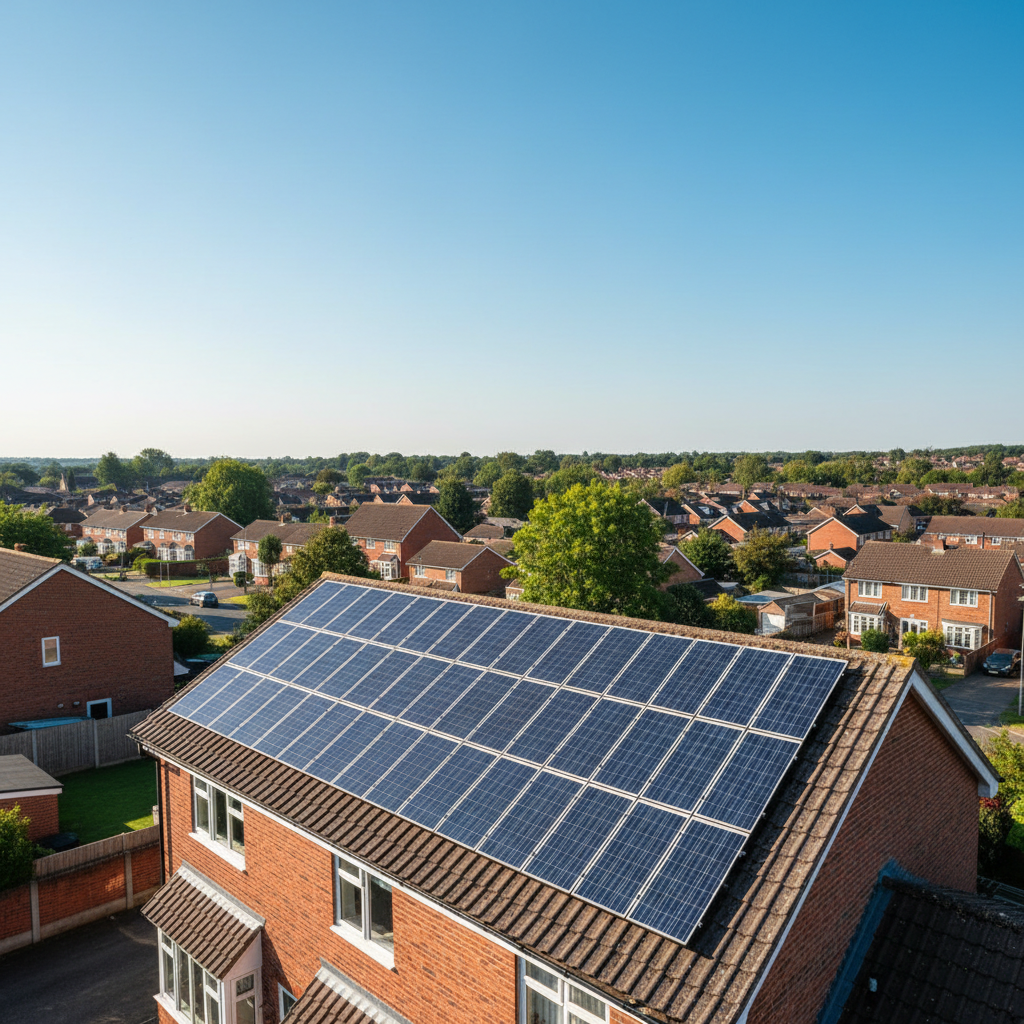
A new report from Solar Energy UK highlights a significant increase in UK rooftop solar installations, driven by elevated energy prices and supportive government policies.
UK Rooftop Solar Installations Set for Record Year in 2026
London, UK – The United Kingdom is on track for a record-breaking year in rooftop solar installations, with over 207,619 MCS-certified systems recorded so far in 2026. This figure has already surpassed the previous annual high of 203,697 set in 2011, and industry body Solar Energy UK projects that installations could reach 300,000 by year-end if current trends continue, as reported by Solar Power Portal.
The surge in solar adoption is attributed to a combination of high energy prices and favourable government policies. The recent outbreak of conflict in Iran led to a sharp increase in energy costs, echoing the energy crisis that followed Russia's invasion of Ukraine in 2022. This ongoing volatility has made self-generated electricity an increasingly attractive option for homes and businesses.
According to Solar Energy UK, the total number of MCS-certified solar installations in the UK now exceeds 2.1 million. The country reached its first million installations over a decade, from January 2009 to July 2019. The second million was achieved significantly faster, taking just seven years to April 2026, with the organisation anticipating three million installations within the next three years.
Drivers Behind the Solar Boom
The primary catalyst for this boom remains the elevated cost of grid electricity. Energy regulator Ofgem's price cap has seen significant increases throughout the year, largely due to the geopolitical situation in the Middle East, although some relief has been provided by government intervention, such as the removal of VAT from electricity bills. The financial incentives for installing solar panels are clear, as noted by Chris Hewett, chief executive of Solar Energy UK. "It's no wonder that such unprecedented numbers of people are going solar. Energy bills remain high, driven by the UK’s longstanding dependence on expensive natural gas. Adding a solar installation is a quick and highly effective way to cut bills for good," he stated.
Beyond individual financial motivations, government policy is playing a crucial role. Regulations encouraging the inclusion of solar and other energy efficiency measures in new-build properties have notably boosted the market. In the first half of 2026, 55,773 new-build homes in England, representing 58% of the total built, were fitted with solar panels. This marks a substantial increase from just 16% in 2021 and 42% in the last quarter of 2024, demonstrating the growing integration of solar technology into modern housing development. Solar Energy UK anticipates this trend will further accelerate with the forthcoming introduction of the Future Homes Standard.

Residential and Commercial Impact
The MCS data covers small-scale installations, encompassing homes, businesses, and community sites such as village halls and schools, but excludes larger commercial and industrial installations like those on warehouses or factories. This focus on smaller systems underscores a significant shift in energy independence at the individual and local level across the UK. March 2026 alone saw a record 28,861 new small-scale solar installations, highlighting the sustained momentum in the sector. The ongoing growth in both retrofits and new builds positions rooftop solar as a cornerstone of the UK's renewable energy transition, offering consumers greater control over their energy costs amidst global market fluctuations.
What this means for asset owners and insurers
- Increased Asset Volume: The rapid growth in rooftop solar installations means a greater volume of assets requiring insurance coverage, from individual residential systems to small commercial arrays.
- Risk Management Focus: Insurers need to assess risks associated with installation quality, maintenance, and potential damage (e.g., weather events, fire) for a rapidly expanding, distributed network of solar assets.
- Business Interruption (BI) Implications: For businesses and potentially large residential systems, a loss of solar generation due to damage could lead to increased energy costs, making BI coverage relevant.
- Product Liability (PL) / Professional Indemnity (PI) Considerations: With more installations, the potential for claims related to faulty equipment (PL) or errors in design/installation (PI) for installers and manufacturers may rise.
Source: solarpowerportal.co.uk