UK Secures Record 4.9GW Solar Capacity in Latest CfD Auction
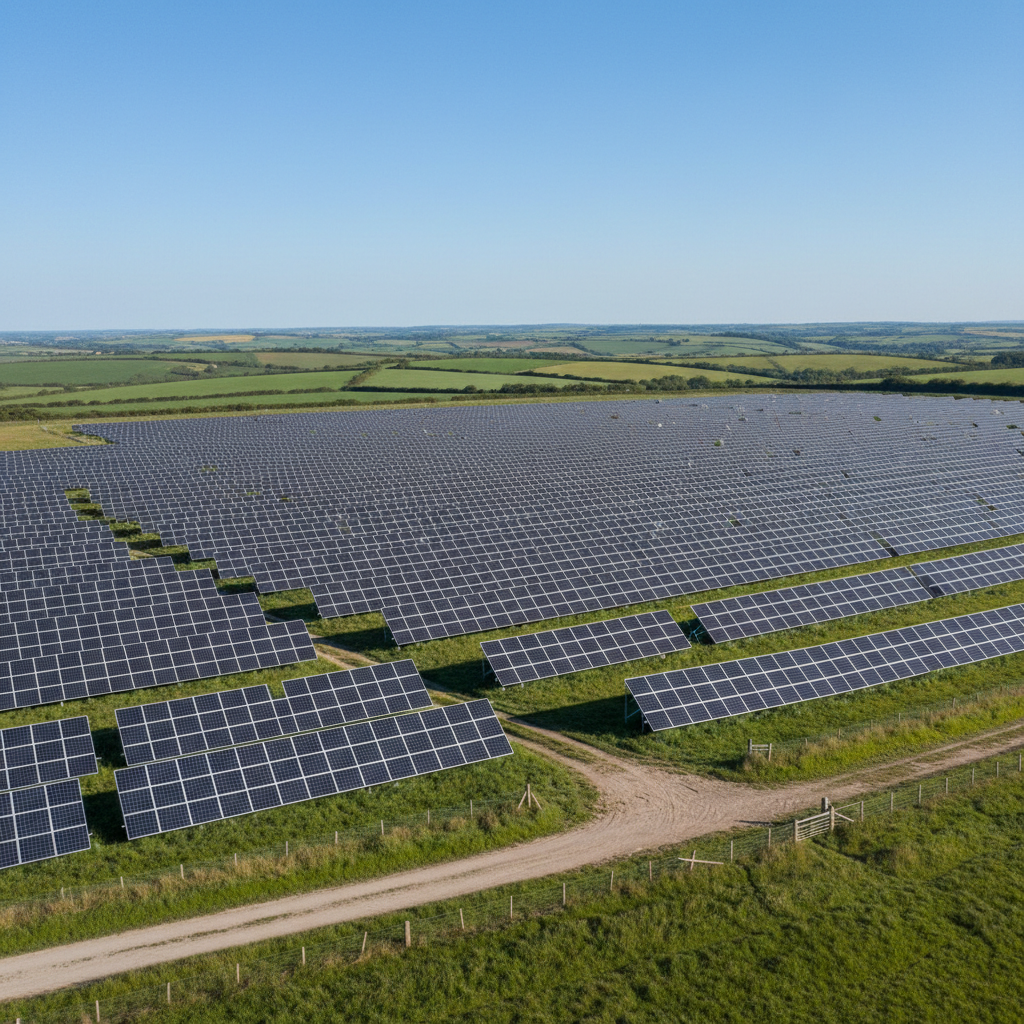

The UK government has announced its largest ever solar energy procurement, contracting 4.9GW of new capacity through the latest Contracts for Differences (CfD) auction round.
The UK has achieved a significant milestone in its renewable energy transition, securing a record 4.9 gigawatts (GW) of new solar power capacity through the government's latest Contracts for Differences (CfD) auction round. This procurement is part of a broader effort that has seen Britain contract a total of 14.7GW of clean energy to date, including a substantial 8.4GW of offshore wind previously announced.
Government Strategy and Price Competitiveness
The CfD scheme, managed by the government-owned Low Carbon Contracts Company (LCCC), is designed to provide long-term price stability for developers of large-scale clean energy projects. This stability aims to de-risk investments and accelerate the deployment of renewable generation. Neil McDermott, LCCC chief executive, highlighted that these projects would deliver new renewable electricity generation at scale, particularly when combined with the record offshore wind capacity from AR7.
Analysis of the latest auction results reveals notable price competitiveness for solar energy. The strike price for new solar projects was agreed at £65.23 per megawatt-hour (MWh). For comparison, onshore wind, also part of this round, secured a strike price of £72.24/MWh. These figures stand in stark contrast to the estimated £147/MWh for newly built gas power stations, underscoring the economic advantages of renewable sources. UK energy secretary Ed Miliband emphasised that backing solar and onshore wind at scale would drive down energy bills and protect consumers from the volatility of fossil fuel markets.
Economic and Energy Security Benefits
Beyond cost savings, the expansion of solar capacity is expected to enhance the UK's energy security. Chris Stark, head of the Clean Power 2030 Mission, noted that each new solar and onshore wind project reduces Britain's reliance on gas power plants, thereby insulating families from potential spikes in global gas prices. The government estimates that the winning projects from this auction round will unlock an additional £5 billion in private sector investment.
One notable success story from this procurement is a solar farm located in West Burton. This site, previously home to the UK's last coal power plant which ceased operations nearly three years ago, has now become the largest solar power recipient of a government contract. This transformation symbolises a shift from traditional fossil fuel generation to modern, sustainable energy sources within the UK's energy landscape.
What this means for asset owners and insurers
- Increased Project Pipeline: The substantial new solar capacity indicates a robust pipeline of construction projects, necessitating comprehensive construction all-risks and erection all-risks insurance, alongside delayed start-up (DSU) coverage.
- Long-Term Operational Risks: As more large-scale solar farms come online, asset owners will require tailored operational insurance covering property damage, business interruption, and performance warranties, considering risks like extreme weather, panel degradation, and grid connection issues.
- Competitive Pricing & Stability: The CfD mechanism provides revenue stability, which can positively influence insurance underwriting by reducing financial risk for projects, potentially leading to more favourable terms for long-term operational policies.
- Supply Chain and Interconnection: The scale of procurement suggests increased demand for components and grid infrastructure. Insurers may need to consider supply chain integrity and the risks associated with grid interconnection stability and outages in their policy offerings.
Source: netzeroinvestor.net