UK Shifts CfD Scheme to Capacity-Based Allocation for Renewables
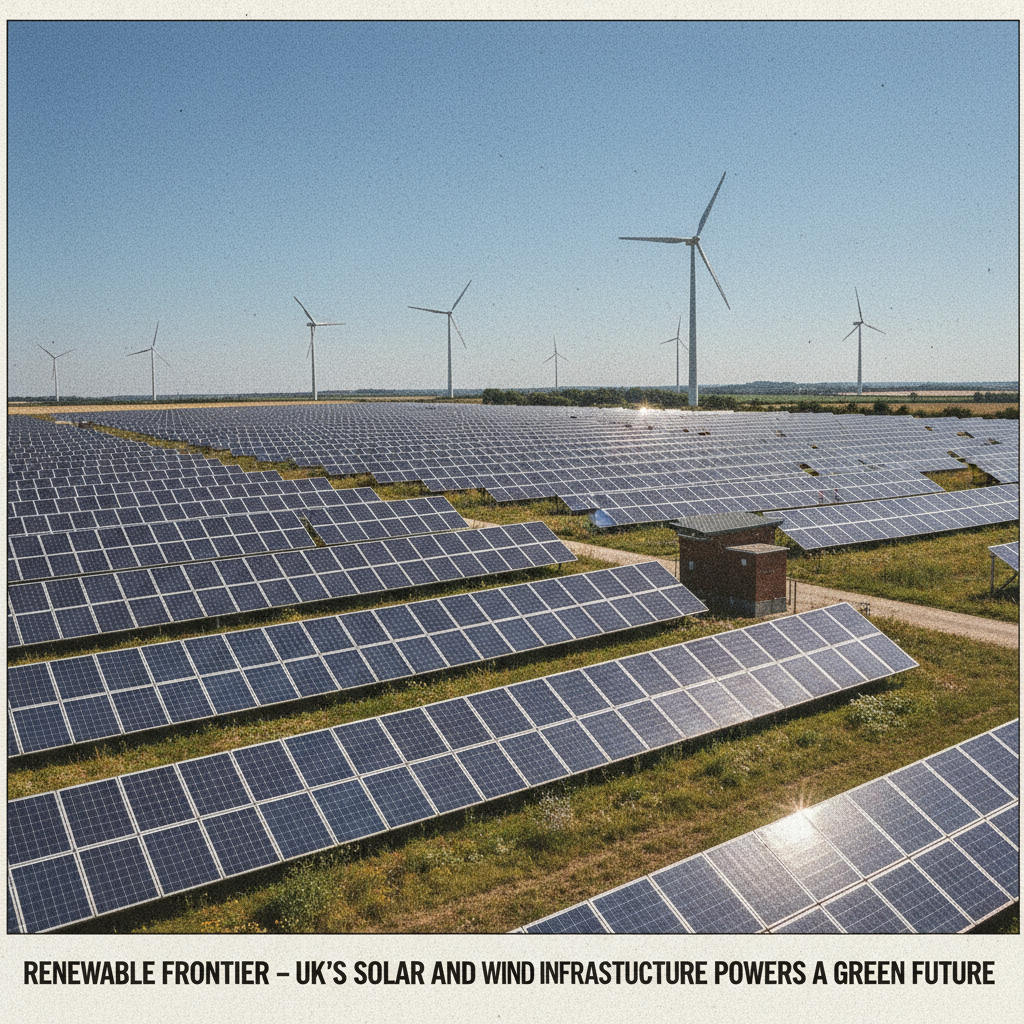

The UK government is reforming its Contracts for Difference (CfD) scheme, replacing monetary budgets with a 'capacity ambition' to accelerate renewable energy deployment.
The UK government has announced significant changes to its Contracts for Difference (CfD) scheme, transitioning from a monetary budget model to a 'capacity ambition' for future allocation rounds. This reform, effective from Allocation Round 7 (AR7), aims to streamline the deployment of renewable energy capacity across the country.
Under the previous system, a fixed budget was set at the outset of each CfD allocation round. The revised approach, however, will see the government publish a 'capacity ambition' instead, outlining the desired gigawatt (GW) target for new renewable projects. The financial budget notice will now be issued after the contract allocation process has concluded, rather than before, according to a report by Solar Power Portal.
Prioritising Capacity for Clean Power 2030 Goals
This strategic shift is designed to align more closely with the UK's ambitious Clean Power 2030 Action Plan (CP30) targets. To meet these objectives, the government projects that at least 12GW of new renewable capacity will need to be secured across AR7, AR8, and potentially AR9, depending on the speed of project deployment. By focusing on capacity targets, the government seeks to expedite the commissioning of new renewable energy projects and ensure a steady pipeline of development.
The reforms grant increased flexibility and control to the Secretary of State for Energy, identified as Ed Miliband in the article, over the CfD budget. With the ability to review anonymised bid information via the delivery body (National Energy System Operator, NESO, for AR7), the Secretary of State can make more informed budget decisions based on the actual capacity secured in the auction. This change is expected to allow for more efficient budget allocation, tailored to the outcomes of the bidding process.
Future Clarity and Forward Planning
Further details on how the 'capacity ambition' will integrate with other auction parameters are expected from the government in the coming months. Additionally, a forward schedule for future allocation rounds will be published, providing greater predictability for developers and investors in the renewable energy sector. The change follows a consultation earlier this year on several proposals for the CfD mechanism, signifying a considered move towards optimising the procurement of low-carbon electricity generation.
What this means for asset owners and insurers
- Enhanced Project Certainty: A clearer capacity ambition and forward schedule may provide greater long-term certainty for renewable energy project developers and asset owners, potentially influencing investment decisions and project financing.
- Risk Assessment for Price Volatility: While the new system aims for more capacity, the retrospective budget setting could introduce new dynamics to price discovery, requiring asset owners to carefully manage bid strategies and insurers to assess market risk exposures.
- Impact on Project Pipeline & Timelines: A push for higher capacity targets could lead to an accelerated pipeline of projects, which may place pressure on supply chains and potentially introduce new project delivery risks that insurers need to underwrite.
- Long-term Stability vs. Short-term Dynamics: The move could offer more long-term policy stability for renewable generation but might create short-term bidding and budgetary uncertainties for specific allocation rounds, necessitating agile risk management strategies.
Source: solarpowerportal.co.uk