Welsh Senedd Showcases Heat Pump Technology for Decarbonisation Drive
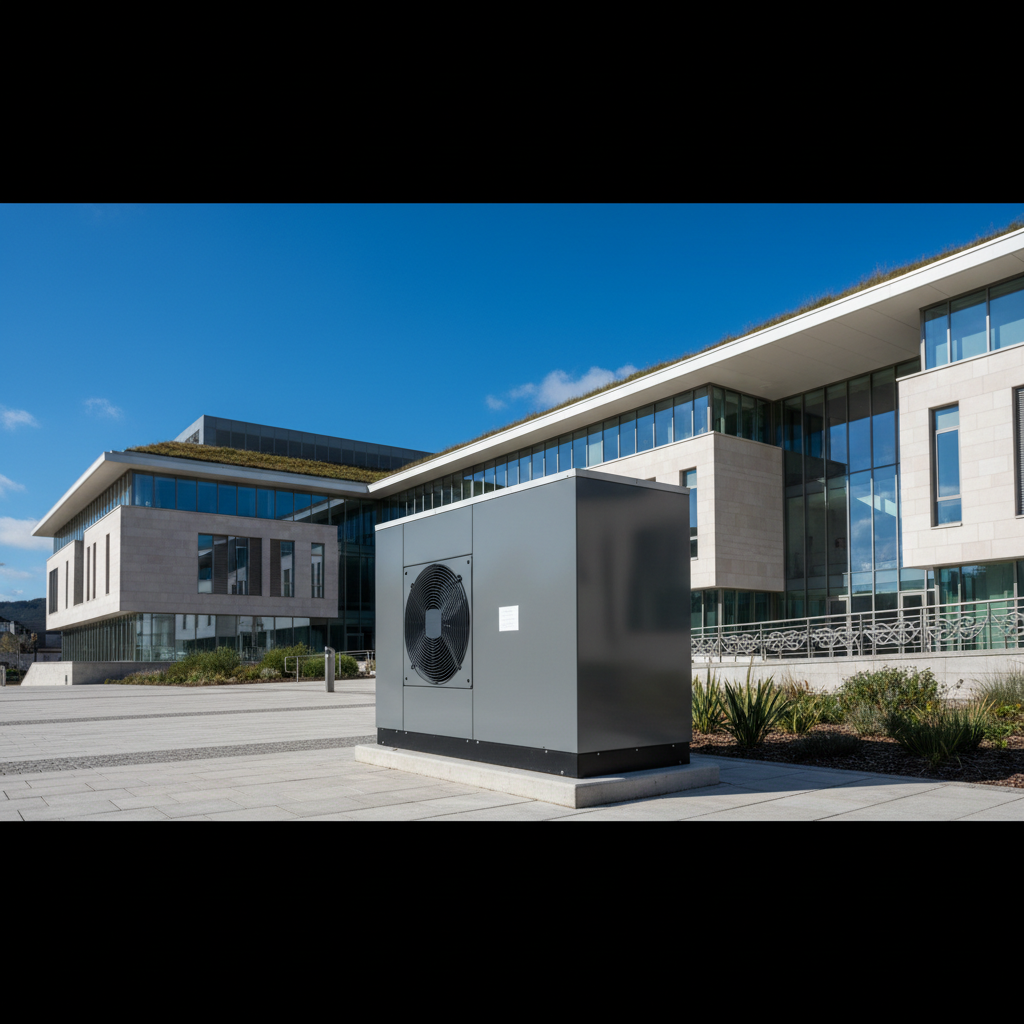

Policymakers at the Senedd were offered a first-hand look at heat pump technology, highlighting its potential for decarbonising heating and boosting the Welsh economy.
An event held recently at the Welsh Senedd sought to demystify heat pump technology for Members of the Senedd and key policymakers, showcasing its critical role in decarbonising heating across Wales. Organised by the Heat Pump Association UK (HPA UK) and Nesta, the 'Hear, See and Feel a Heat Pump' event brought operational units to Cardiff Bay, providing a tangible experience for attendees.
The event aimed to address common misconceptions surrounding heat pumps, which are increasingly recognised as a vital tool in achieving clean heat ambitions. While Wales currently leads the UK in heat pump installations per capita, a significant increase in deployment rates is required to meet long-term objectives.
Policy and Economic Opportunity
Members of the Senedd from various political parties attended, including sponsoring MS Anthony Slaughter, Leader of the Welsh Green Party. Mr. Slaughter emphasised the urgency of decarbonising homes and businesses to meet climate commitments, noting that heat pumps offer benefits beyond emissions reduction, including lower energy bills and enhanced energy security. He underscored the need for robust policy and financial commitments from the Welsh Government to accelerate the widespread adoption of clean heating solutions, making them accessible to all.
Industry projections indicate that an increased deployment of heat pumps, aligned with government targets, could generate an annual economic value of £529 million and support nearly 5,500 jobs in Wales by 2035. This highlights the dual benefit of the clean heat transition as both an environmental imperative and a substantial economic opportunity, fostering local, sustainable employment and strengthening supply chains.
Manufacturers such as Mitsubishi Electric and Vaillant featured their heat pump units, with experts on hand to explain their reliable and efficient operation. Representatives from Wolseley Renewables Centre also participated, illustrating how investments in training and supply chains are cultivating skills and supporting the growth of Wales's clean heat sector.
Industry and Skill Development
Chloe Davis, Policy and Communications Lead at HPA UK, remarked that such events are crucial for policymakers to witness heat pumps in action, distinguishing facts from fiction and building confidence in the technology. She reiterated that the transition to clean heat is not only an environmental necessity but also an economic chance to create thousands of skilled jobs, invigorate local supply chains, and attract investment across Welsh communities.
Ben Laverty of Mitsubishi Electric commented on the positive discussions regarding the integral role of heat pumps in Wales's low-carbon heating transition. He stressed that while the technology is proven for both new builds and retrofits, large-scale deployment requires confidence, a skilled installer base, and a robust supply chain. Mark Wilkins, Technology and Solutions Portfolio Director at Vaillant and HPA UK Co-Chair, emphasised the necessity of a strong partnership between government and industry to build consumer confidence, support UK manufacturing investment, and develop a skilled workforce.
Andrew Busst, Training Service Manager at Wolseley Renewables Centre, reinforced the importance of installer training. He highlighted that the challenge now lies in ensuring a sufficient number of skilled professionals are available to install the technology correctly, with investment in training centres designed to build installer confidence. He noted that once policymakers directly observe the technology, the conversation naturally shifts from 'if' heat pumps work to 'how fast' the workforce can be mobilised for their delivery.
What this means for asset owners and insurers
- Increased Adoption & Market Growth: Policy support and public awareness campaigns for heat pumps in Wales signal a growing market. Insurers should anticipate an increase in policy requests for both domestic and commercial heat pump installations, requiring tailored coverage for mechanical breakdown, installation errors, and performance guarantees.
- Installation Quality & Risk Management: The emphasis on a skilled installer base highlights a key risk area. Insurers will need to consider the qualifications and certification of installers when underwriting policies to mitigate claims arising from faulty installations or maintenance, impacting professional indemnity and public liability cover.
- Supply Chain Resilience: The focus on strengthening local supply chains and manufacturing implies potential for reduced lead times and better parts availability. This could positively influence business interruption (BI) and contingent business interruption (CBI) risk for asset owners by potentially shortening repair times following a system failure.
- Technological Performance & Claims: Demonstrating heat pump efficacy directly to policymakers aims to build confidence. For insurers, this reinforces the technology's maturity, but careful assessment of manufacturer warranties, maintenance schedules, and potential thermal efficiency claims remains crucial for property and equipment breakdown policies.
Source: hpauk.org.uk